
GRegioflex, biogas for agriculture
Biogas from your farm’s slurry
GRegioflex digests the thin slurry from your farm in a fixed-bed digester and turns it into power and heat. We support your project from the idea to the finished plant.
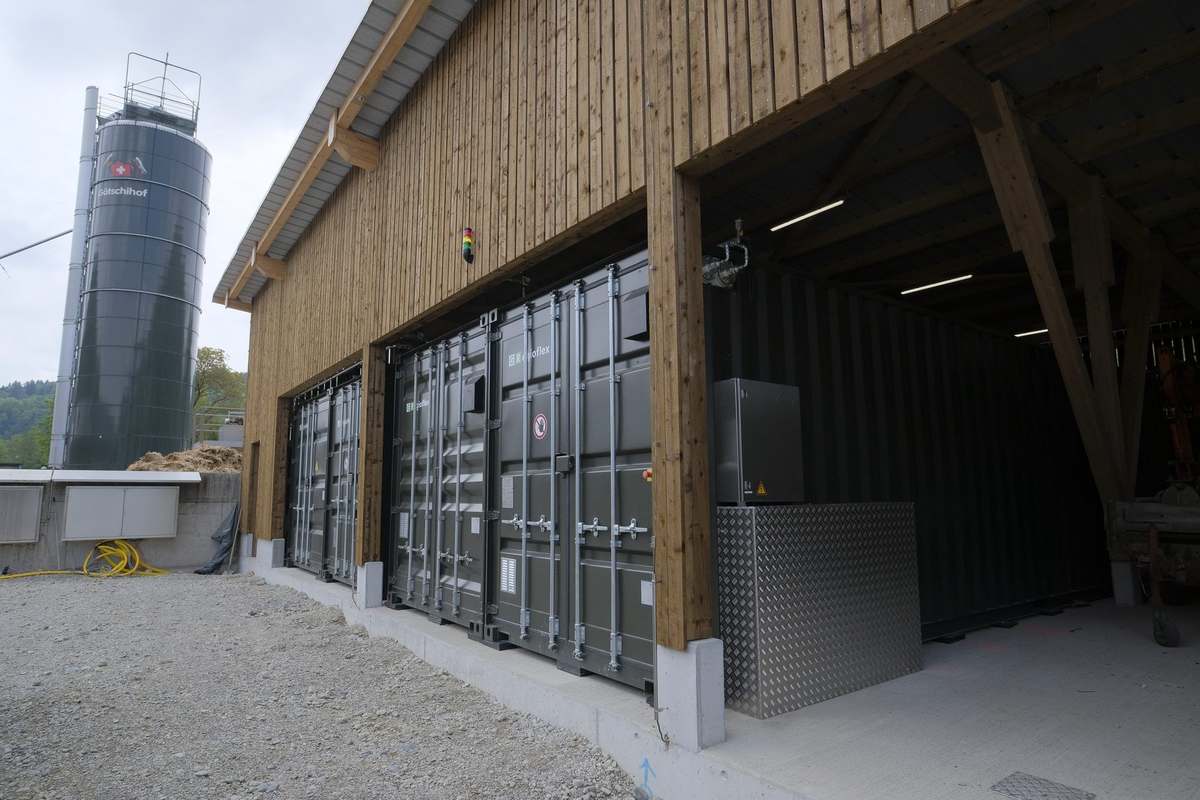
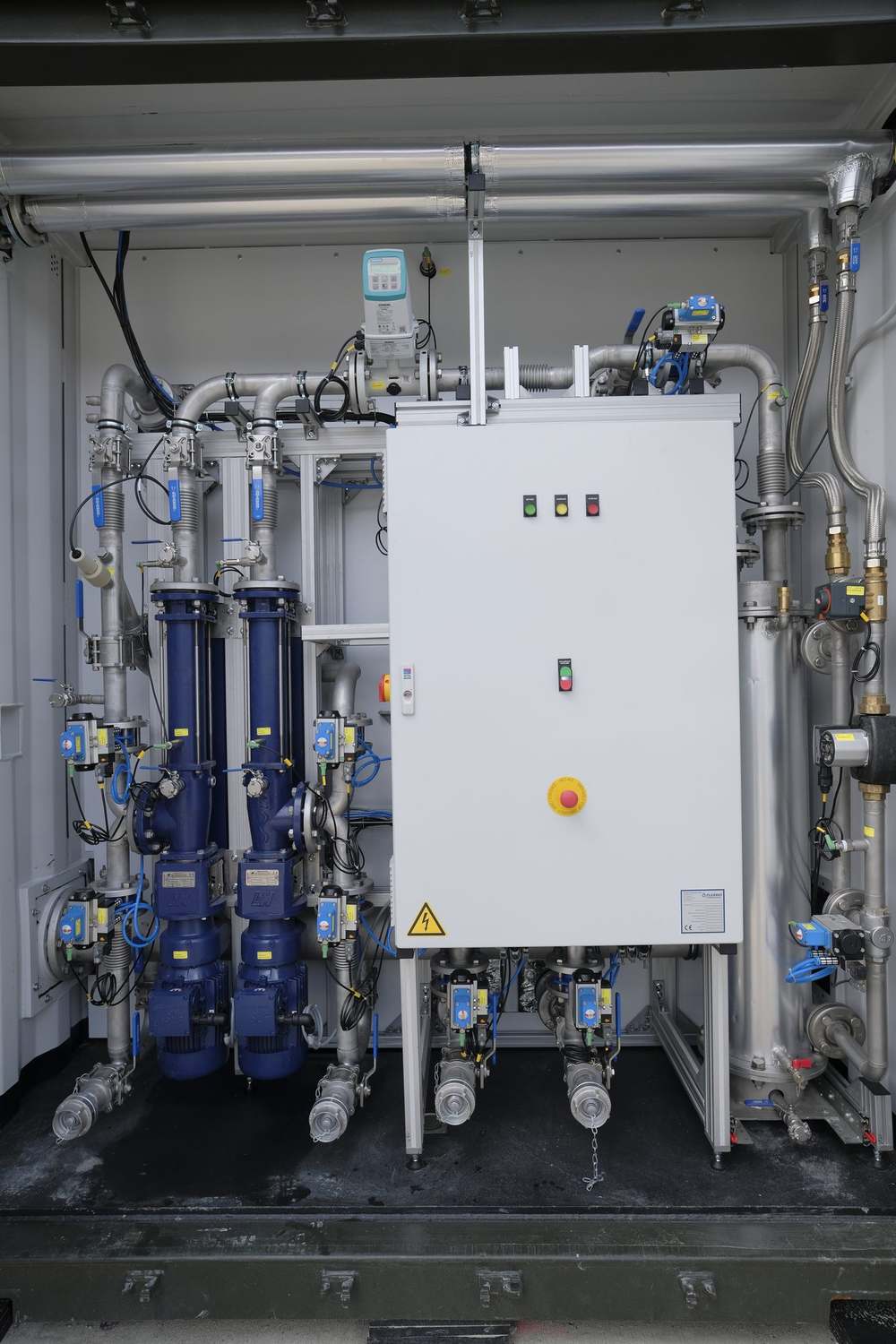
Four steps from the barn back to the barn
- Separate. A separator splits the fresh slurry into thin slurry and solids.
- Digest. The thin slurry is digested in the fixed-bed digester. The biogas collects in the gas holder on top.
- Power and heat. A combined heat and power (CHP) unit in the container converts the gas into power and heat, with an output of 20 to 50 kWe.
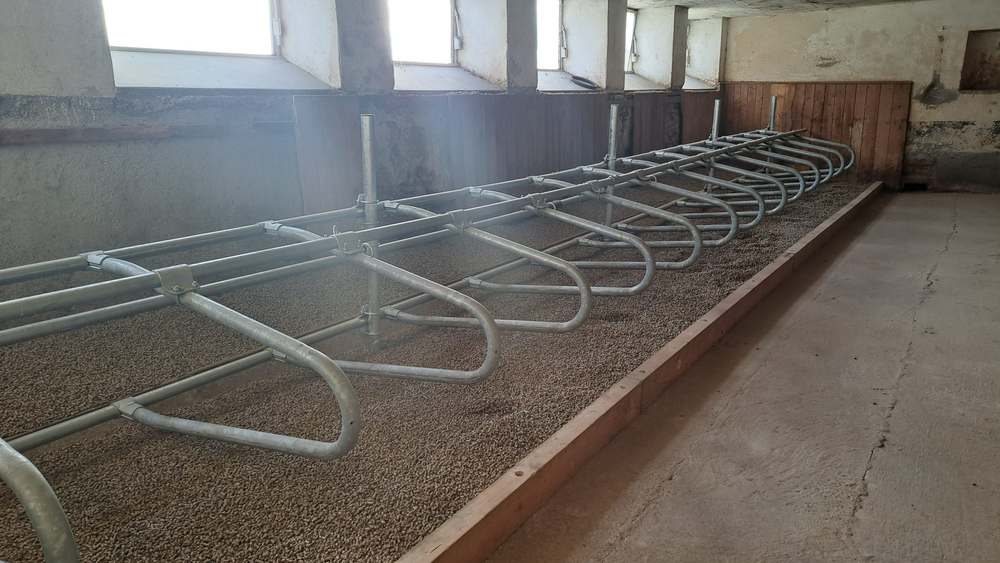
- Bedding. The solids return to the barn as fresh bedding and later re-enter the slurry cycle.
How bio-waste becomes gas
From biogas to power and heat
What changes on the farm
- No purchased bedding. The bedding consists of the undigested fibres of your own feed and is spread regularly and fully automatically.
- Slurry without stirring. Digested, separated slurry no longer needs to be stirred, contains more available nitrogen and is suitable for trailing-hose application.
- Less energy in the digester. The fixed-bed digester needs less energy than a stirred-tank digester.
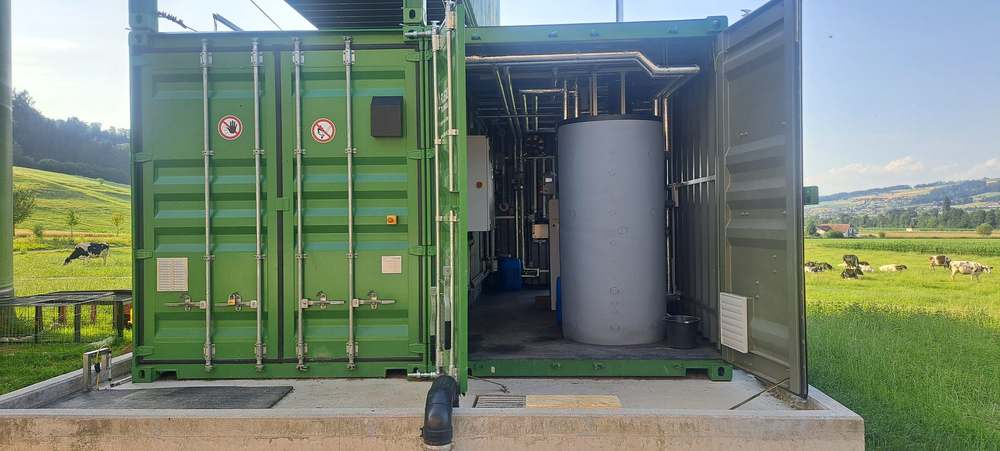
- Small footprint. Gas treatment and the CHP unit are housed together in the container.
What your barn should offer
The starting point is a loose-housing barn with solid floor areas and cubicles, a manure scraper and a collection pit for fresh slurry. Existing barns can be adapted.
A plant only makes sense for farms with more than 80 livestock units (LU). We determine in the farm check whether your farm is suitable.
Seven steps to operation
- Initial contact. You get in touch via the farm check or a callback request.
- Preliminary project. We check whether and how a plant fits your farm.
- Project development and building permit application.
- Funding application.
- Implementation.
- Testing and commissioning.
- Operation and support.
Allow time for the approval process.
A look inside farm plants
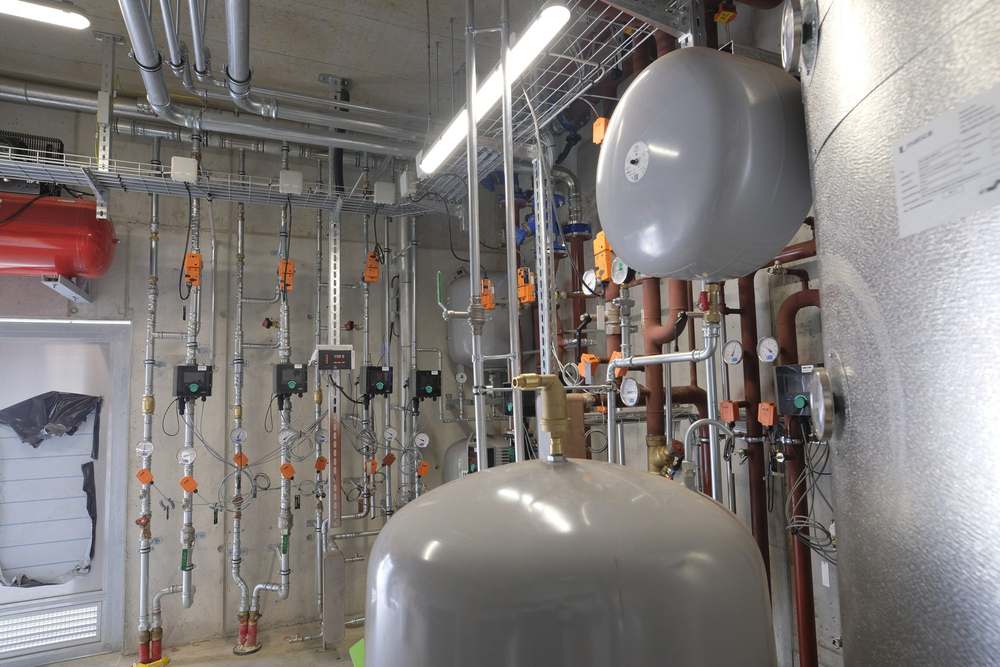
Aeugstertal ZH: technical room for the heat network 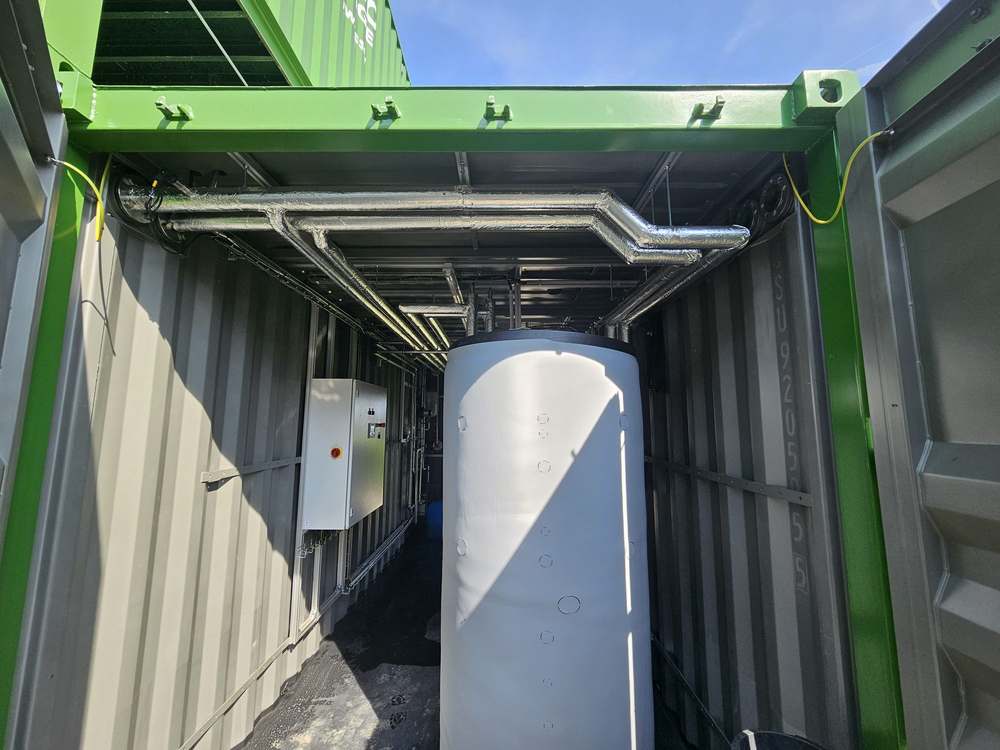
Ermensee LU: view into the container with heat storage tank 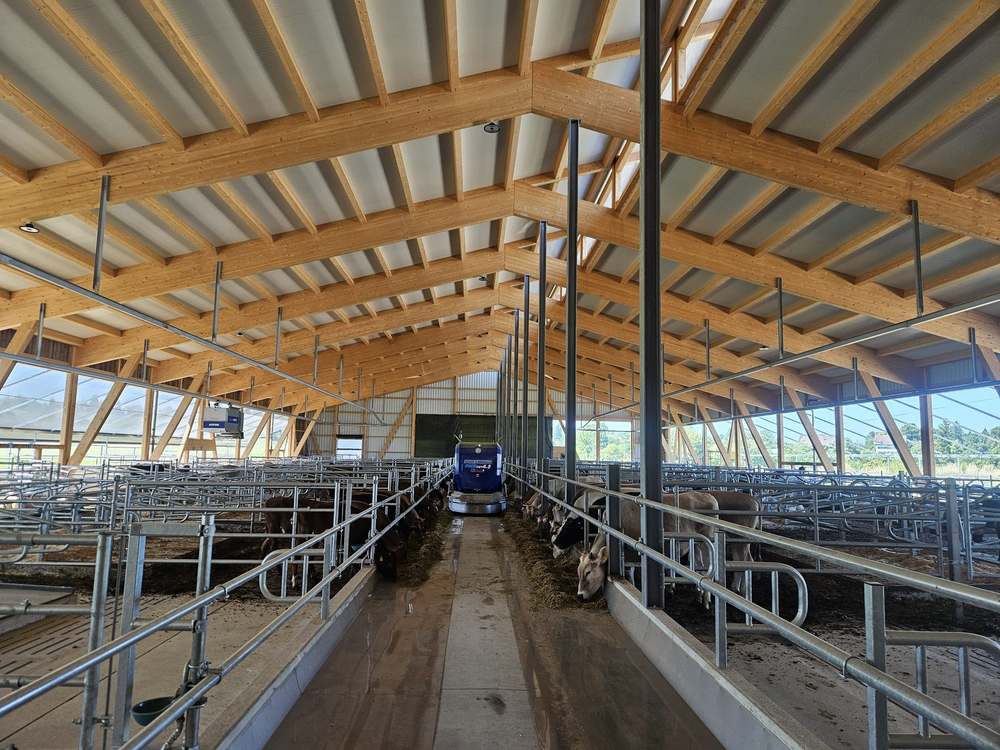
Samstagern ZH: the new loose-housing barn (plant under construction)
Farms with GRegioflex
Aeugstertal ZH
50 kWe · in operation since July 2025
Illighausen TG
20 kWe · in operation since July 2025
Ermensee LU
20 kWe · in operation since September 2024
Suhr AG
2 × 20 kWe · in operation since January 2026
Samstagern ZH
50 kWe · under construction
Does GRegioflex suit your farm?
Tell us about your farm. We will get back to you and tell you whether a GRegioflex plant makes sense and what comes next. We state prices and funding rates only after the preliminary project.